Celadon: Understanding the Green Glaze
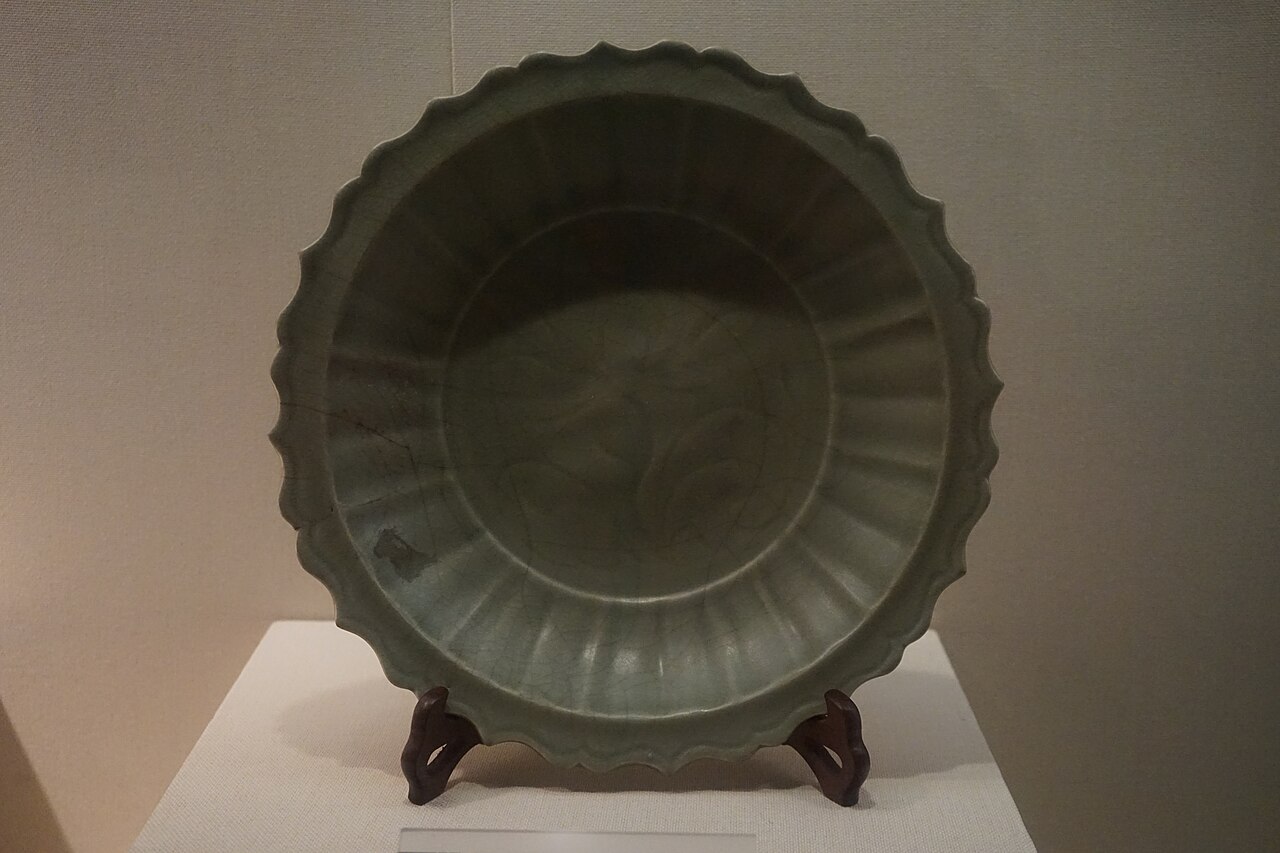
Celadon is the name used in the West for a family of green-glazed ceramics. In Chinese it is simply qingci – “green ware”. The colour can range from pale blue-green to deep olive.
Where the green comes from
A small amount of iron in the glaze turns green when the kiln is fired in a reduction atmosphere – that is, with limited oxygen. With more oxygen, the same glaze would fire yellowish or brown. Controlling this atmosphere is one of the key skills in making celadon.
The Longquan tradition
Longquan in Zhejiang province is one of the best-known celadon-producing areas. Longquan-style pieces are often admired for thick, soft, slightly opaque glazes that are built up in several layers. Where the glaze runs thin – on rims, edges and carved lines – the colour lightens, giving the surface depth.
Crackle
Some celadon glazes have a network of fine cracks, called crackle. It forms as the glaze and body shrink at different rates while cooling. On some pieces it is intentional and decorative; on food-use pieces, choose a smooth glaze or clean crackled items carefully.
Living with celadon
Celadon tableware and teaware are used just like other glazed ceramics. Wash by hand, avoid sudden temperature changes and let thick-walled pieces warm up gradually before pouring in boiling water.