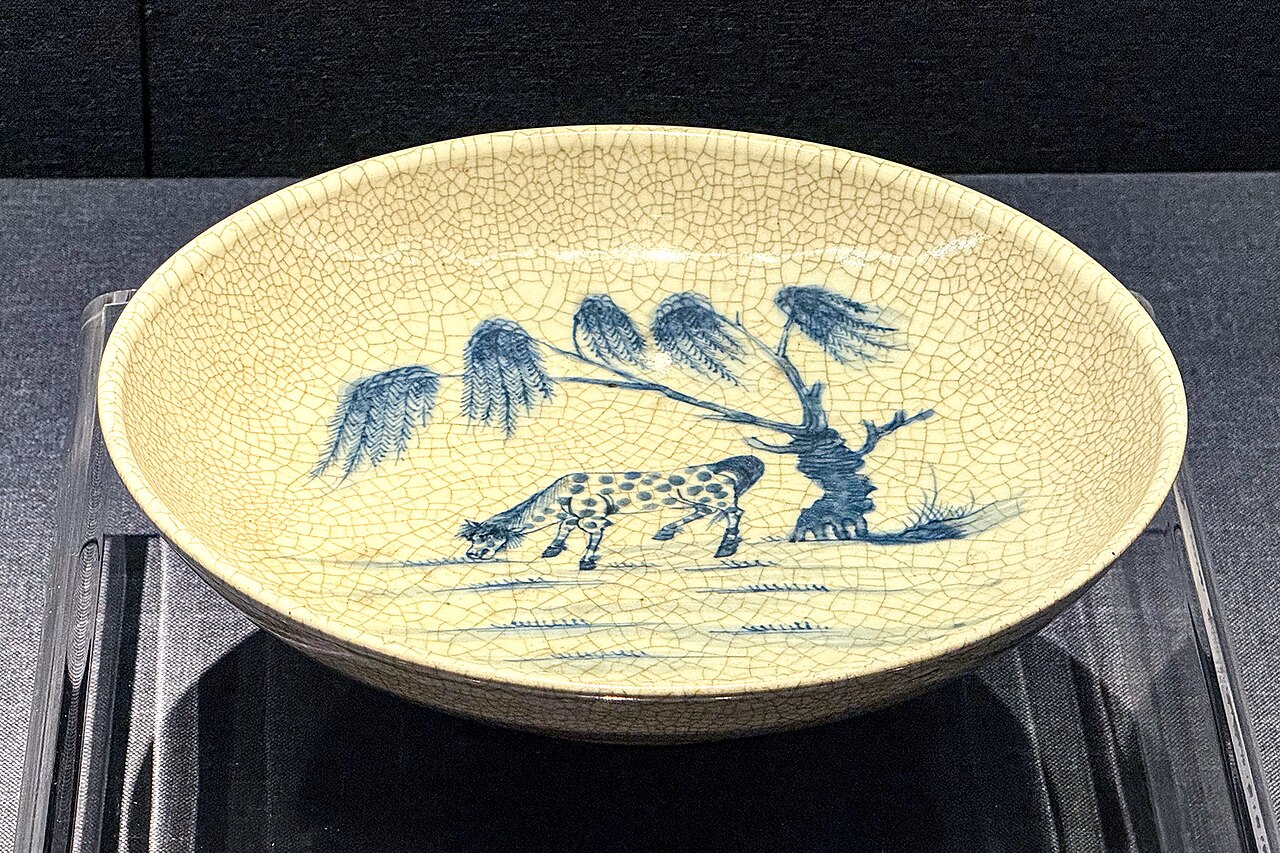
A Short Guide to Blue-and-White Porcelain
Blue-and-white (qinghua) is probably the best-known style of Chinese porcelain. Its appeal is simple: crisp cobalt blue on a white ground, and patterns that range from bold dragons to delicate flowers.
How it is made
The decoration is painted with a cobalt-based pigment on the dry, unfired body. The piece is then dipped in clear glaze and fired at high temperature. In the kiln the pigment develops its blue colour and becomes sealed beneath the glaze – which is why blue-and-white decoration does not rub off with everyday use.
Shades of blue
The exact tone depends on the cobalt, how thickly it is applied and the firing. Some blues are bright and clear, others greyish or deep violet-blue; darker spots where the pigment pooled are part of the character of hand painting.
Common motifs
- Lotus scrolls – winding stems and flowers, often used as borders.
- Fish and water plants – associated with abundance.
- Landscapes – mountains, rivers and pavilions.
- Plum blossom, bamboo and pine – plants admired for resilience in winter.
Hand-painted or printed?
Hand-painted lines vary in width and depth of colour, and repeated motifs are never exactly identical. Printed decoration (decals or transfers) tends to have perfectly even lines and dot patterns visible under magnification. Both can be attractive; product listings should simply say which method is used.